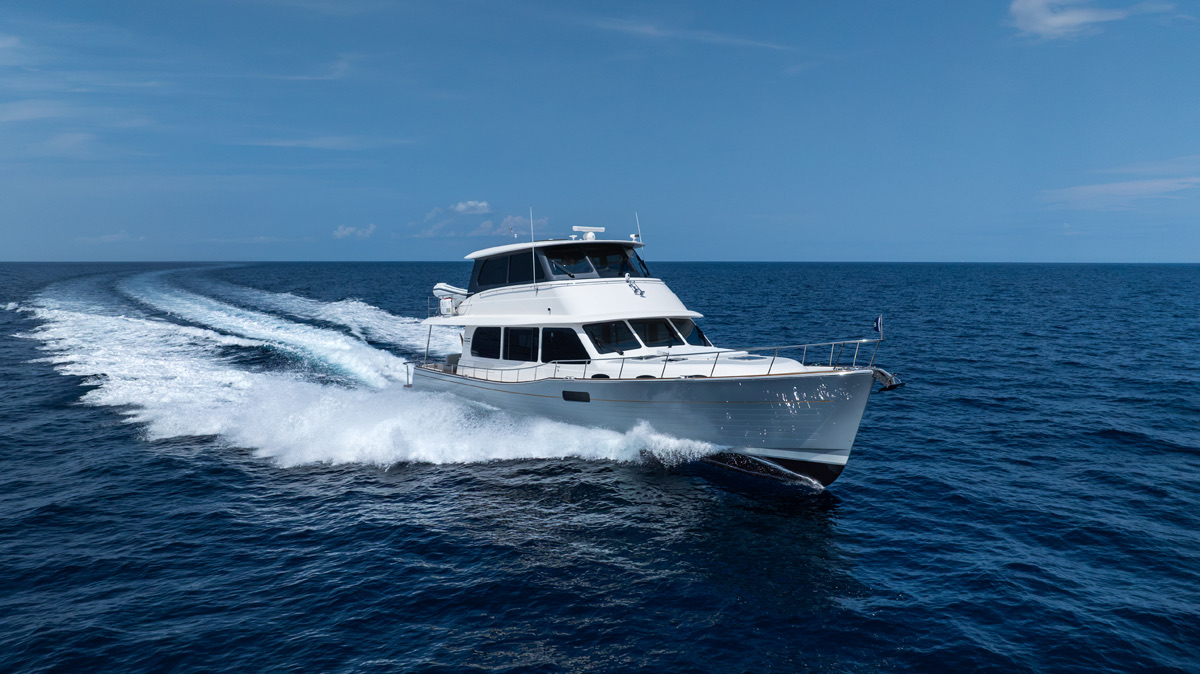
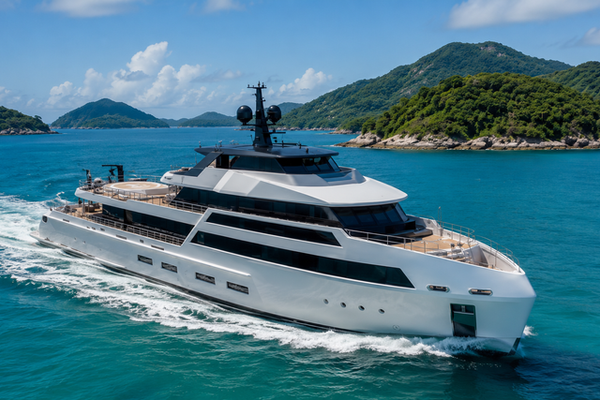
When a vessel like the Enejota, the superyacht associated with Neymar Jr., appears on social media, the first things to draw attention are inevitably its dimensions, its estimated value, the accommodation and the helipad.
From the perspective of the Ocean Economy and the marine industry, however, there is another equally impressive dimension: the number of people, companies, knowledge and economic activity required to develop a project of this category. A vessel of approximately 46.5 metres can mobilise, across its different stages, more than 2,000 professionals.
That does not mean they are all inside the shipyard at the same time. This workforce is spread across architecture, design, engineering, planning, structural work, installations, interiors, finishing, inspections, testing and commissioning. The true size of a vessel like the Enejota, therefore, cannot be measured in metres alone. It must also be measured in jobs, knowledge, income and supply chains set in motion.
One of the largest leisure yachting projects developed in Brazil
The Enejota is approximately 46.5 metres long, with around 800 square metres of area, eight suites and five crew cabins. Among its distinguishing features is a configuration considered unique, with two master suites. Propulsion comes from four Caterpillar C32 ACERT engines of 1,450 hp each, coupled to high-performance waterjets, totalling approximately 5,800 hp.
The project was developed in Brazil by Inace SuperYachts, in Fortaleza, with design attributed to Brazilian designer Fernando Almeida. More than a large vessel, the Enejota highlights Brazil's capacity to develop projects of high added value and technical complexity. Inace has more than 55 years of experience, over 600 vessels delivered and more than 45 explorer yachts built.
From FSV to unrestricted-navigation superyacht
The Enejota did not originally emerge as a leisure superyacht. The vessel was an FSV, Fast Supply Vessel, a category developed to quickly transport people, equipment and supplies between the coast and oil platforms. It was later converted into an explorer yacht, a category designed to offer robustness, autonomy and operational capability on longer voyages.
Converting a service vessel into a superyacht means changing its purpose and integrating architecture, engineering, electrical and hydraulic systems, air conditioning, automation, hospitality, safety and operations. It is precisely this complexity that explains the mobilisation of so many specialities throughout a project of this scale.
Architects are also part of the marine industry
A major yachting project also depends directly on architects and interior specialists. In a home, a piece of furniture can simply be placed in a room. On a vessel, it must account for weight, vibration, movement, heel, humidity, salinity and the need for access to the systems installed behind floors, walls and panels. Every centimetre must be planned.
That is why the marine industry is also a knowledge industry. The book O Motor Secreto do Brasil ("Brazil's Secret Engine"), by Mané Ferrari, describes precisely this ecosystem, in which design, engineering, raw materials, technology and different trades converge to create highly complex vessels.
A supply chain that stretches across Brazil
Although the main execution of a project is concentrated in the shipyard, its supply chain does not end at the factory gates. Engines, generators, electronics, cables, panels, coverings, glass, furniture, fabrics, paints, safety equipment and special components may be produced or supplied by companies located in different states.
The marine sector does not work in isolation. It connects industry, commerce, services and tourism, radiating economic activity to segments not always immediately associated with boatbuilding. The boat is only the final product. Behind it lies an extensive chain of work, income and companies in motion.
Far beyond luxury
The 46.5 metres, the eight suites, the LED screen and the helipad are the part that shows. The professionals, the engineering, the knowledge and the income represent the part Brazil still needs to learn to see. Behind a large vessel, there is an entire marine industry at work.
By: Redação Mundo Mar
Photo: Mundo Mar e IA Mundo Mar