Anyone passing along Avenida Beira-Mar Norte no longer needs to rely on project renderings to see that one of the largest urban transformations on Florianópolis's waterfront has genuinely begun.
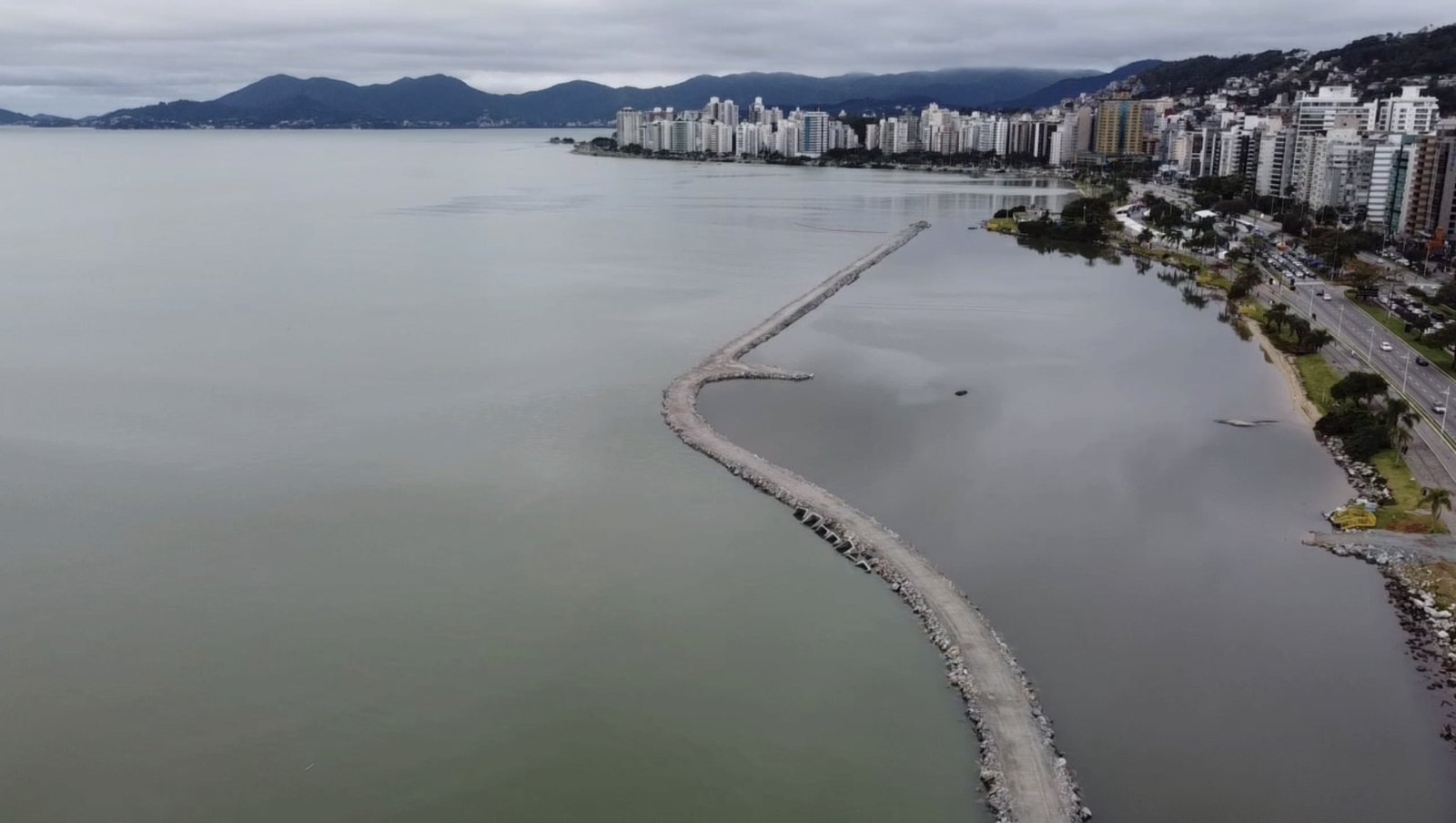
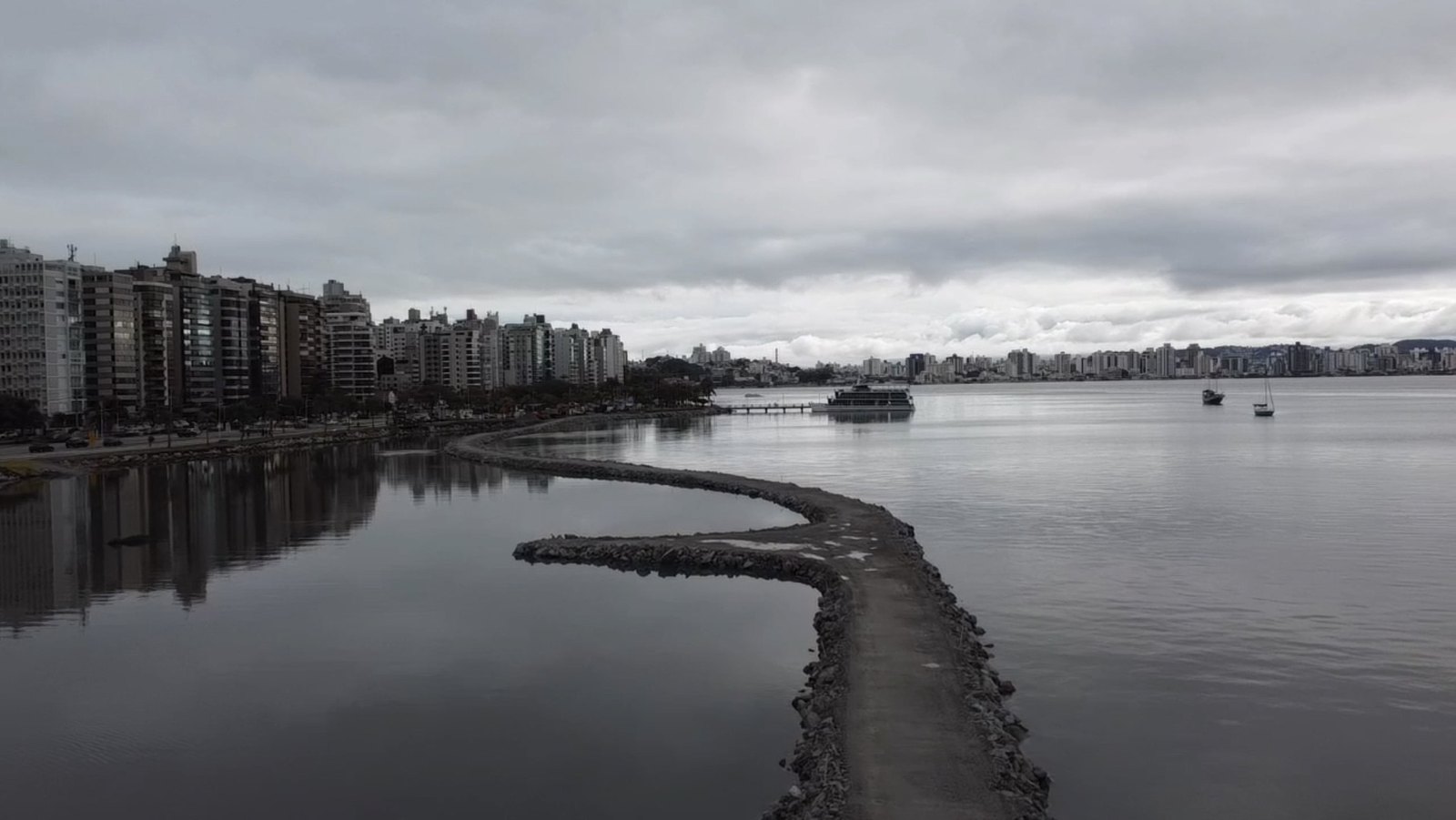
The advance of the rocks over the North Bay is increasingly clear. Footage taken by Mundo Mar on Sunday, 30 August, shows the current stage of the structure that is beginning to redraw the coastline in the stretch between Praça de Portugal and Praça do Sesquicentenário.
This is the first major structural phase of the Beira-Mar Norte Urban Park and Marina.
And although it is common to call the structure appearing over the water a breakwater, the work being done right now is technically the rock fill, formed by placing and settling rocks that create the base and containment needed for the future landfill.
More than 27,000 tonnes in a single month
The most recent official figure released by the Florianópolis City Hall shows the scale of the operation.
On 16 August, exactly one month after the effective placing of rocks in the water began, the structure had already advanced 405 metres.
By that date, more than 16,300 cubic metres of material, equivalent to more than 27,000 tonnes, had already been used in the work.
The City Hall also reported that this initial front had passed 20% physical progress. The rock fill will be roughly 4.5 metres high, using the level of the existing pier on Beira-Mar Norte as a reference.
Since that update, the work has continued. As of this article's publication, however, the municipality had not yet released a new official linear measurement. For that reason, Mundo Mar chooses not to project a new length from the images.
The photographs taken last Sunday therefore serve precisely as an independent record of the visual stage of the work at the end of August.
The pace of the work draws attention
The advance deserves attention because this is a structurally important stage for everything that will be built afterwards.
When implementation began, in March, the first phase, involving preparation and shaping of the rock fill, was presented with an estimated horizon of around six months. During the effective execution, which started in July with the continuous placing of rocks, the first figures pointed to a significant pace: 405 metres in just 30 days.
Mundo Mar itself had already shown, in August, that the pace observed at the site could bring this front forward relative to the schedule initially reserved for the job.
But there is an important difference between the work advancing quickly and an official change to the delivery date.
So far, the City Hall has not announced a formal revision of the project's overall deadlines. The advance of the rock fill is therefore a positive sign for the schedule, but it does not yet allow the opening to be officially brought forward.
After the rocks comes the sand
And what happens once the rock fill is complete?
An even bigger transformation begins.
The next planned stage is dredging sand from the bottom of the North Bay, material that will be used to build the landfill bounded by the structure currently under construction.
In practice, what is still water today will begin to turn into physical ground on which a significant part of the future urban park will be built.
That is exactly why the current advance of the rocks is so important. The rock fill is not simply the outline starting to appear over the bay. It prepares the structure that will allow the new-ground phase to begin.
After that, the project moves progressively to the other structures foreseen in the plan, including leisure, sports, circulation, landscaping, services, parking and the marina's nautical infrastructure.
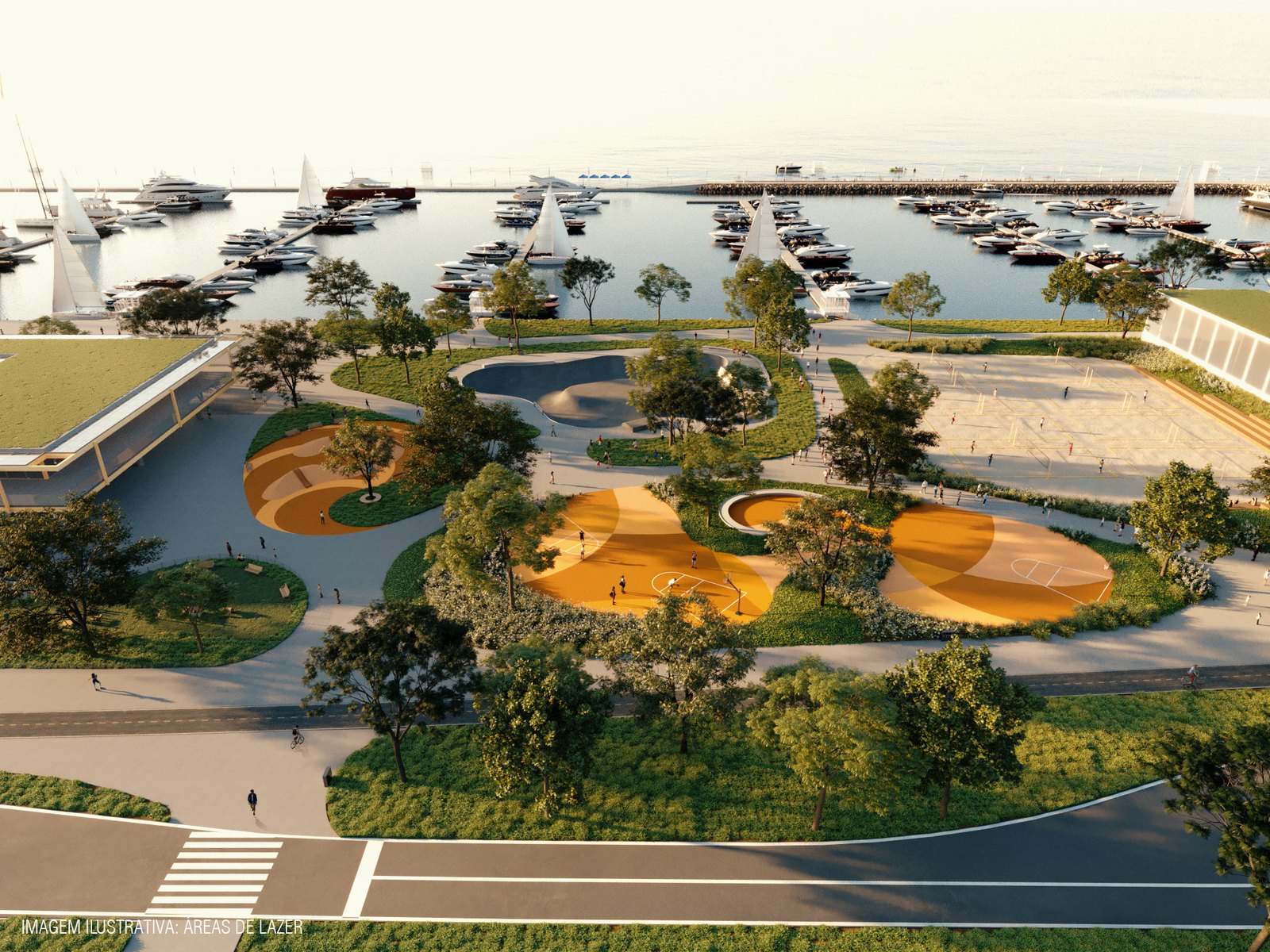
A park of roughly 140,000 square metres
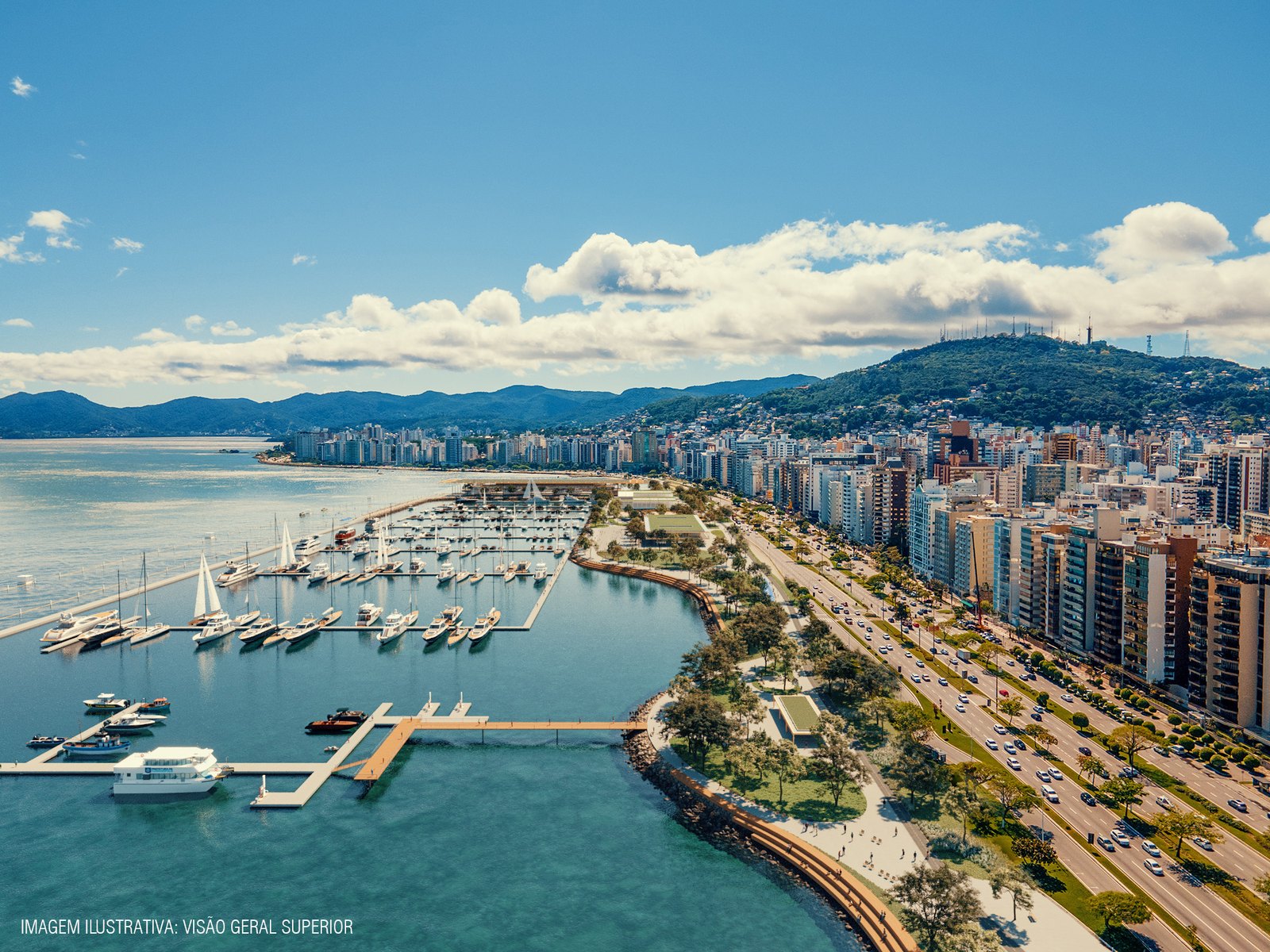
The full project occupies an area of around 440,000 square metres, divided between about 140,000 m² of public urban park and roughly 300,000 m² for the marina area.
The proposal aims to broaden Florianópolis's relationship with the sea, bring together new public spaces for leisure and sport, and integrate nautical infrastructure, maritime transport and the other transport modes of Avenida Beira-Mar Norte. The City Hall's own Planning Network highlights, among the project's goals, nautical development, tourism, the creation of economic opportunities and future integration with maritime transport and BRT.
The marina should significantly expand berthing capacity within the city's central area and create a new concentration of demand for maintenance, technical services, refuelling, tourism, gastronomy and activities linked to the Ocean Economy.
The announced investment is around R$ 350 million, entirely private, carried out by JL Construções under a 35-year concession of use.
When will the public be able to use the new park?
This is probably the point that stirs the most curiosity now that the structure can be seen advancing over the water.
The most recent schedule released by the municipal administration sets up to five years for the full completion of the project, but works with the expectation of opening the urban park to the public in roughly two and a half years.
That means the population will not necessarily have to wait for the entire marina to be finished to start using part of the new structure.
It is important, however, to treat this timeframe as a forecast, not a new definitive opening date. Coastal works of this scale depend on the progress of the different construction stages, on operational conditions and on meeting technical and environmental requirements.
The transformation is now visible
For years, the Beira-Mar Norte Urban Park and Marina existed for much of the population in plans, hearings, permits and computer-generated images.
Now there is rock upon rock.
And as the rock fill advances, it becomes possible to physically grasp the scale of the area that will be added to the waterfront.
The coming weeks and months will be especially important. Completing this structure will open the way to dredging, the landfill and, later, to a transformation that will no longer happen only over the water but will start to take shape on new urban ground.
Mundo Mar will continue following the progress of the work, comparing the records made over the months and showing not only how far the structure advances, but what each new phase represents for Florianópolis, for nautical tourism and for the Ocean Economy.
By: Redação Mundo Mar
Photo: Foto: Mundo Mar