ENATA, a United Arab Emirates company specialising in advanced composite engineering and high-performance marine technologies, announced in September a strategic investment in Manta Foils, an electric hydrofoil systems manufacturer also based in the country. With the deal, ENATA now holds a minority stake in Manta Foils, turning into a partnership a relationship that already existed on the factory floor.
The logic of the move is easy to grasp and says a lot about where boating is heading. ENATA had been supplying carbon composite components for Manta Foils' products, helping to develop lightweight, durable and fast hydrofoil platforms. Now, instead of merely selling parts to the client, it decided to buy a slice of it.

What an eFoil is, the board that flies above the water
This part is worth explaining, because it is the heart of the story.
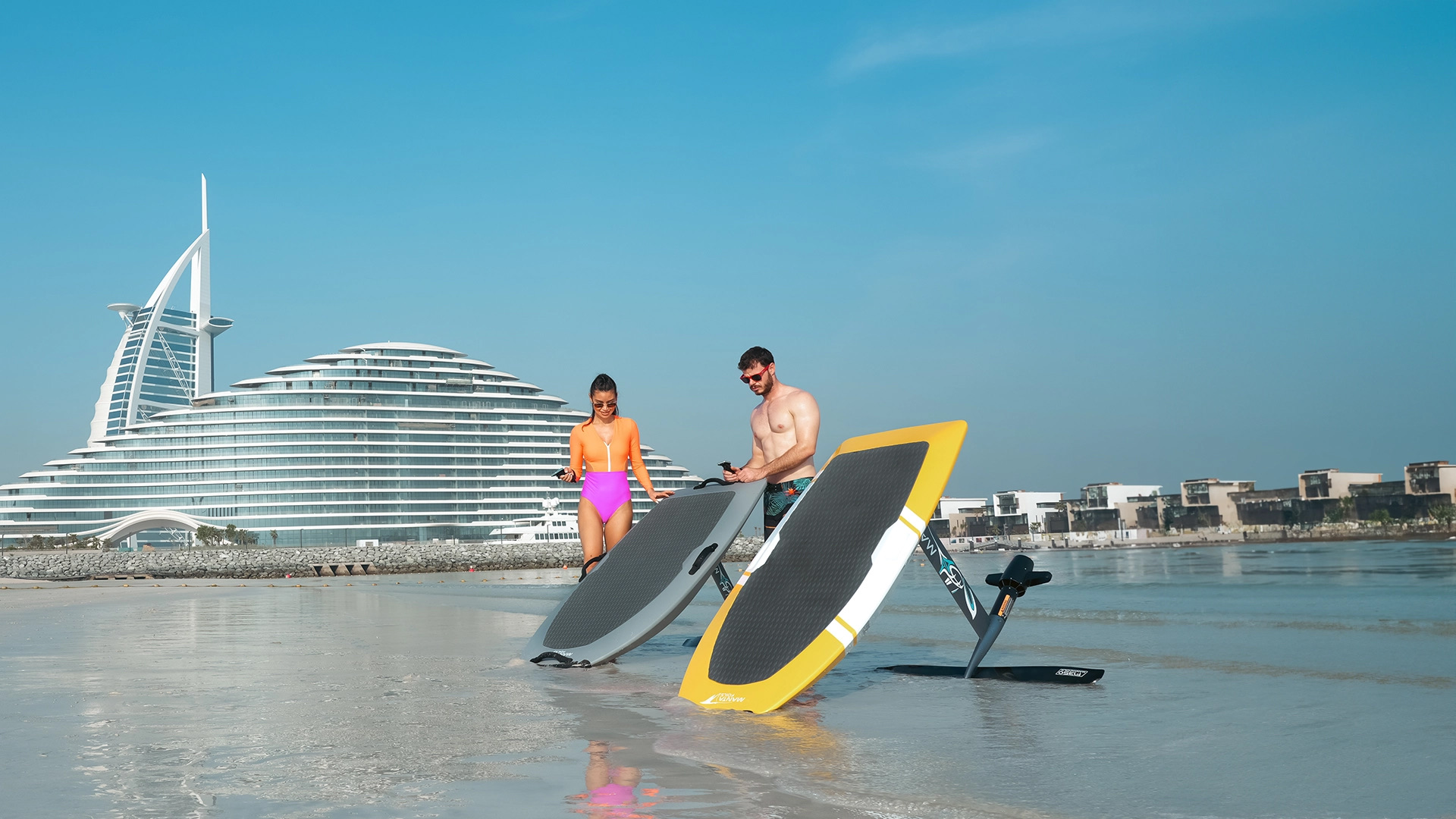
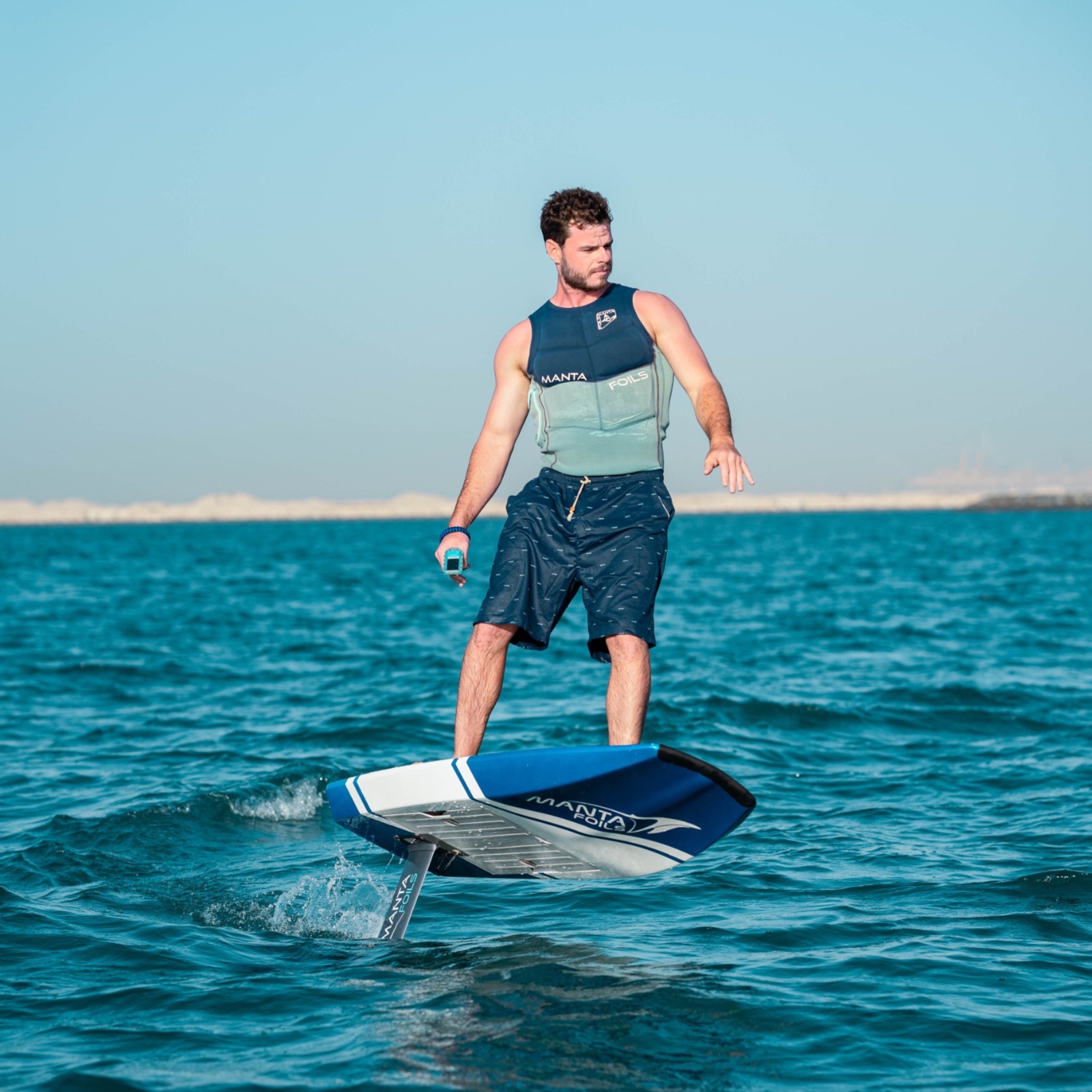
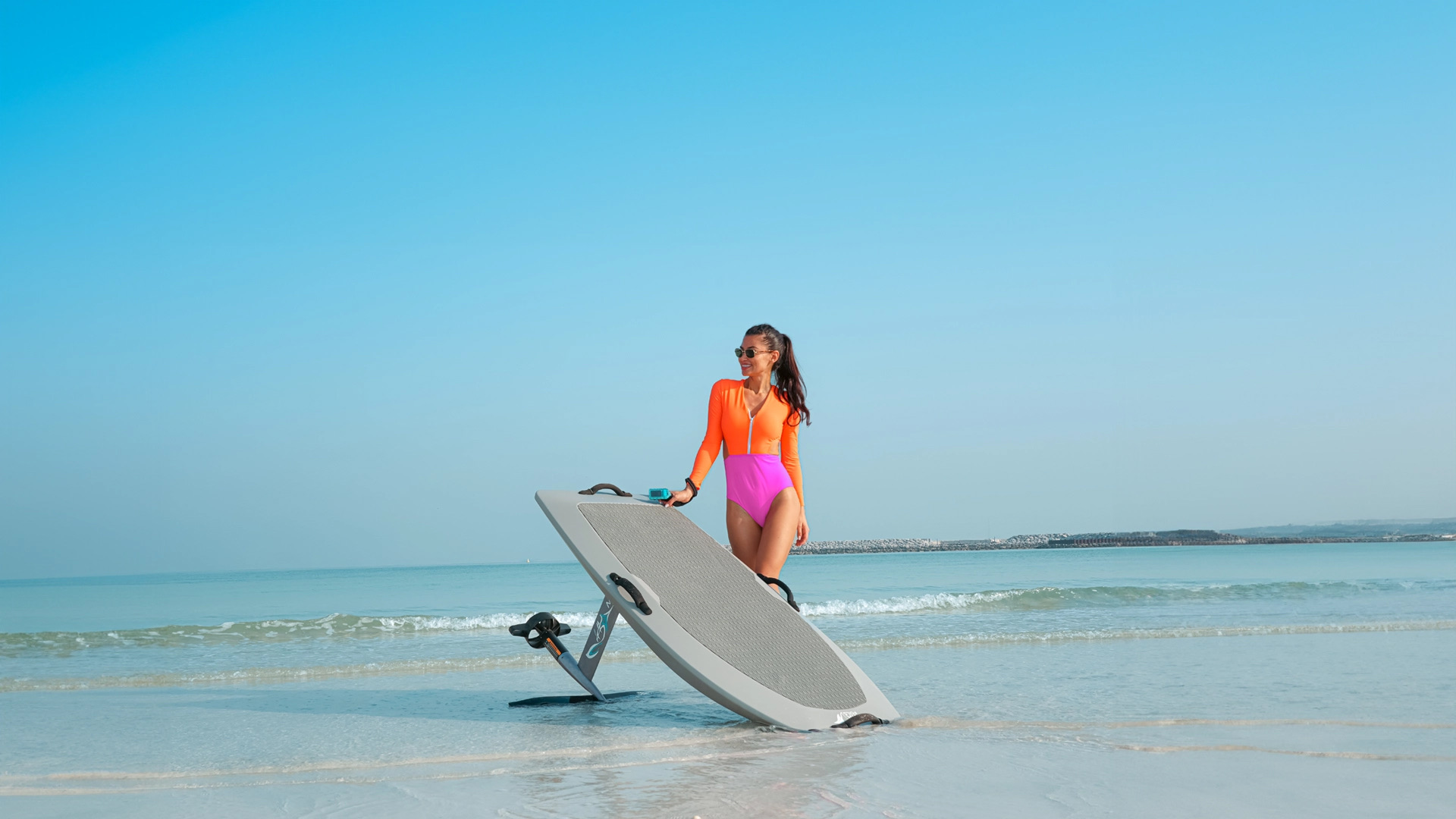
An eFoil is a board fitted with a hydrofoil, a kind of submerged wing attached to a vertical mast, and an electric motor with a propeller. When the rider accelerates, using a wireless hand controller, the water flowing over the wing generates lift, exactly like the air under an aeroplane's wing. Past a certain speed, the board lifts off the surface and starts gliding through the air, with only the mast cutting the water.
The result is silent riding, with no exhaust, no wake and none of the constant slamming of the waves. It is the same hydrofoil physics that racing boats use to gain speed, miniaturised and electrified to fit under a single person's feet. Alongside full eFoils, Manta Foils also works with foil-assist systems, which add that assisted lift to boards used for other purposes.
From supplier to shareholder
ENATA's move is a clear case of what the industry calls vertical integration: a company that makes an essential component decides to buy into the business that assembles the final product.
In practice, this usually happens when the supplier sees that the partner's technology has a future and prefers to share in the growth rather than keep merely selling parts. That is exactly what ENATA signalled when it formalised the deal.
"Manta Foils has developed an impressive technology platform and a strong position within the rapidly evolving electric hydrofoil market," said Alois Vieujot, CEO of ENATA Group. According to him, the investment reflects the company's confidence in that vision and its commitment to supporting technologies that redefine performance, efficiency and user experience in marine environments.
Under the partnership, ENATA will keep supplying advanced composite solutions and will expand collaboration in engineering and research. Manta Foils, in turn, gains access to ENATA's research and development capabilities, including a new base in Abu Dhabi, to accelerate future products and industrialisation at scale.
Who ENATA is
ENATA is no newcomer to the world of hydrofoils. Based in Dubai, the company is known for building the FOILER, the ten-metre flying carbon yacht named SPIRIT, a boat that rises on submerged wings and sails with its hull out of the water. Its core activities include research and development and engineering in the marine and aerospace fields.
It is from this background in boats that fly on foils and in precision carbon-fibre manufacturing that ENATA decided to bet early on smaller-scale electric boating, rather than wait for the shift to arrive.
Who Manta Foils is
Manta Foils designs and manufactures electric hydrofoil systems, from full eFoils to foil-assist solutions. Also based in the UAE, it serves customers in several countries through an expanding distribution network and works with modular technologies aimed at both the end consumer and the professional market.
The company's asset is an integrated platform that brings together batteries, propulsion and proprietary electronics in a scalable architecture. It is this common base that allows several different products to be derived from the same components, something valuable for anyone wanting to produce at volume and cut costs.
A small deal with a big signal
The deal is small in size, a minority stake, but big in what it signals.
First, it shows electrification advancing in recreational boating through its lightest and most accessible end, individual equipment, even before it takes over larger boats. Second, it consolidates the United Arab Emirates as a foiling-technology hub, bringing together within one group the manufacture of composites, the engineering of flying boats and electric propulsion systems.
There is also a third point, looking beyond the consumer product. Both companies say they intend to explore supplying electrification solutions and carbon composite components to other manufacturers in the sector. In other words, the technology developed for the flying board may end up inside third-party products, accelerating the market's transition toward more efficient boating.
Manta Foils will keep developing its platform, and both companies already speak of new launches planned for 2026 and beyond. The message behind the investment is bigger than the eFoil itself: the sea of the future is likely to be electric, silent and, increasingly, able to fly above its own water.
By: Redação Mundo Mar
Photo: Foto: Cortesia ENATA