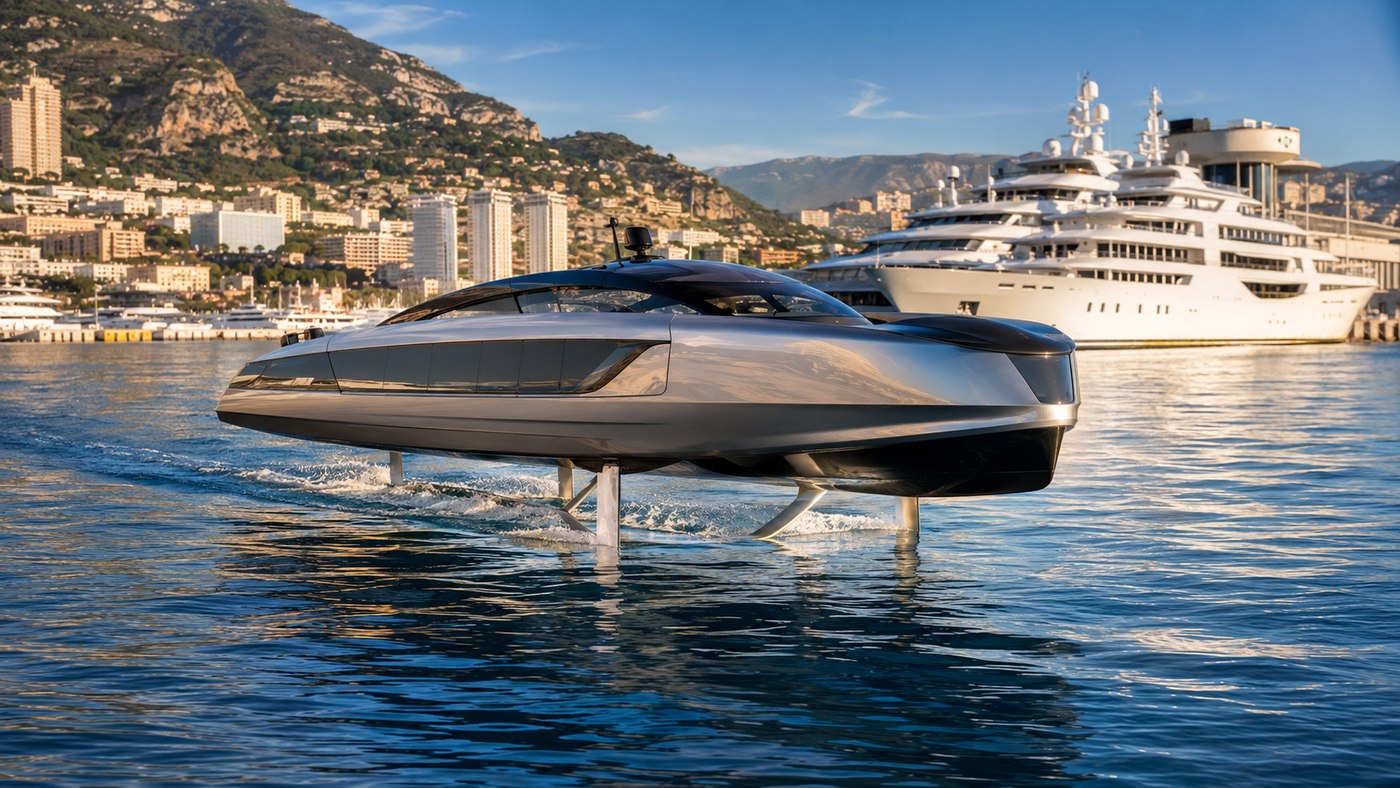
While the market debates fuel prices and emissions, a fleet of experimental boats is already at sea testing, in practice, what navigation will look like in the coming decades. From 8 to 11 July, the Monaco Energy Boat Challenge brought together a record 56 teams from 22 countries to put to the test the technologies that promise to decarbonise boating: electric propulsion, hydrogen, green methanol and even artificial intelligence applied to navigation.
Organised by the Yacht Club de Monaco, the challenge has established itself as a kind of open-air nautical laboratory. Instead of stands, what you see are prototypes actually sailing, universities, startups and manufacturers testing solutions that, sooner or later, reach the market.
The debut of e-methanol at sea
The main highlight of this edition was the debut of e-methanol as a marine fuel. E-methanol is produced from hydrogen combined with CO₂ captured from the air, combining two bets of the energy transition into a single liquid fuel, easier to store and transport than pure hydrogen.
According to the challenge's jury president, e-methanol can be reconverted into hydrogen to power fuel cells and offers about three times more energy capacity, with zero emissions and zero noise during operation. The demonstration came from the Eclipse, a methanol-electric hydrofoil developed by 22 students from the universities of Twente and Saxion, in the Netherlands, presented as the first foiling boat built by a student team to sail on green methanol. The vessel uses a 5-kW reformed-methanol fuel cell and flies on foils to reduce drag and use less energy.
Why this matters to Brazil
If this conversation sounds familiar, it is because Brazil is already at this frontier. The JAQ H1, the world's first research and exploration vessel powered by green hydrogen, was born from an entirely Brazilian project and showed, at the Marina Itajaí Boat Show, that marine decarbonisation is not distant-future talk, it is hull, engine and route.
What Monaco makes clear is that there is no single answer. Electric, hydrogen, green methanol and hybrid systems converge on the same goal: to sail using less, polluting less and making less noise. And each of these paths sets in motion a chain of engineering, research, components and professional training, precisely the logic of the Ocean Economy we defend.
A trend already moving the market
The bet has economic backing. Market studies project that the hydrogen-powered boat segment will grow at rates above 15% per year in the coming years, while the electric boat market advances above 11% per year. This is no longer fiction: these are real vessels, in growing production, driven by demand for quiet, efficient and clean navigation.
The message of the Monaco Energy Boat Challenge 2026 is clear: the race for the sea's energy has already begun, and Brazil, with a vast coastline, Amazonian rivers and an expanding marine sector, has everything it needs to sail ahead, not in tow.
With information from the Monaco Energy Boat Challenge / Yacht Club de Monaco.
By: Redação Mundo Mar
Photo: Ilustração IA / Mundo Mar