AquaRio has earned accreditation from the Latin American Association of Zoos and Aquariums (ALPZA), an international recognition granted to institutions that meet high standards of safety, animal welfare, conservation, education, sustainability and scientific research.
The achievement reinforces the positioning of South America's largest marine aquarium as an institution committed not only to visitation and entertainment, but also to protecting biodiversity, producing knowledge and raising public awareness about the importance of the oceans.
According to ALPZA, the accreditation process involves a comprehensive assessment of institutions, covering everything from animal husbandry and care to governance, organisational culture and the programmes developed in conservation and education.
A rigorous review of procedures
To achieve accreditation, AquaRio went through a detailed review and inspection process. Assessed aspects included internal procedures, infrastructure, responsible husbandry practices for animals under professional care, conservation programmes, sustainability initiatives and the educational activities offered to the public.
Accreditation represents more than an institutional seal. It confirms that the aquarium's operation is aligned with internationally recognised standards and that there is a permanent commitment to improving processes, caring for the fauna and contributing to biodiversity conservation.
An aquarium dedicated to ocean conservation
Located in Rio de Janeiro's Port Region, AquaRio is built on the pillars of research, education and conservation. The institution develops and takes part in scientific studies in partnership with universities, research centres and other organisations. Initiatives include research related to corals, seahorses, sharks, rays and other species.
The work also includes programmes focused on the reproduction and conservation of threatened species. Among the results highlighted by the institution is the reproduction under professional care of the butterfly ray, a native marine species considered threatened.
The facility houses thousands of animals
With 26,000 square metres of built area and approximately 4.5 million litres of water, AquaRio is home to around 10,000 animals from approximately 350 different species, distributed across environments designed to meet the animals' needs and provide an educational experience for visitors.
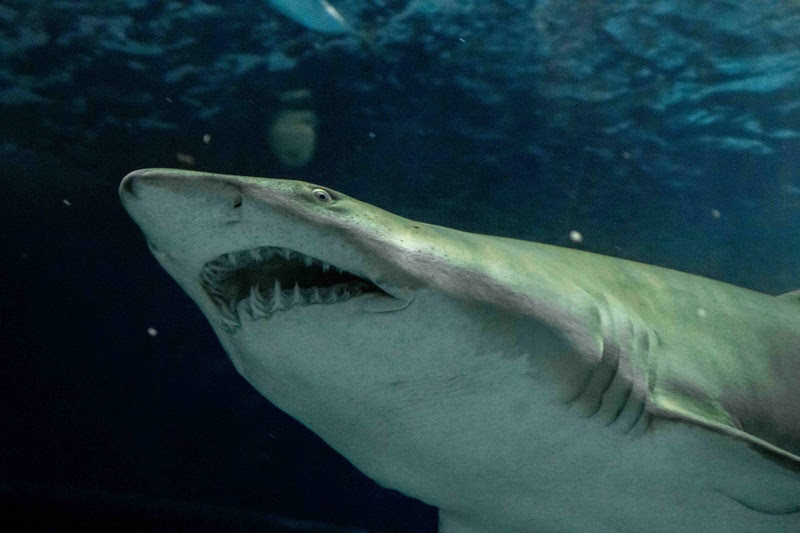
Among the main spaces is the Great Ocean Tank, known as the Tancão, which allows the public to observe sharks, rays and different fish species. An underwater tunnel provides an immersive experience and brings visitors closer to the diversity found in marine environments.
Education as an instrument of transformation
One of AquaRio's main goals is to encourage the public to learn about marine biodiversity in order to understand the need to preserve it. The educational experiences help present themes such as ecosystem balance, threats to marine life, species conservation and the impacts of human activity on the oceans.
This work becomes even more important given the challenges facing marine ecosystems, such as pollution, habitat loss, climate change and pressure on different species.
Recognition strengthens marine conservation
ALPZA accreditation reinforces AquaRio's role as an institution dedicated to the responsible care of animals and the conservation of aquatic ecosystems. The recognition also highlights a transformation in the role played by contemporary aquariums: more than exhibition spaces, these institutions can act as centres of scientific research, species reproduction, environmental education and support for biodiversity protection projects.
The achievement represents an important step forward for the sector in Brazil and shows that tourism, science and conservation can go hand in hand in building a more conscious relationship between society and the oceans.
By: Redação Mundo Mar
Photo: Divulgação