Every season, the sea gets a little smarter. The major technological developments of 2026 reveal a marine industry increasingly focused on three words: safety, efficiency and connectivity. We have gathered the innovations drawing the most attention in the international market — and which, sooner or later, will reach our waters too.
Safety that watches over you
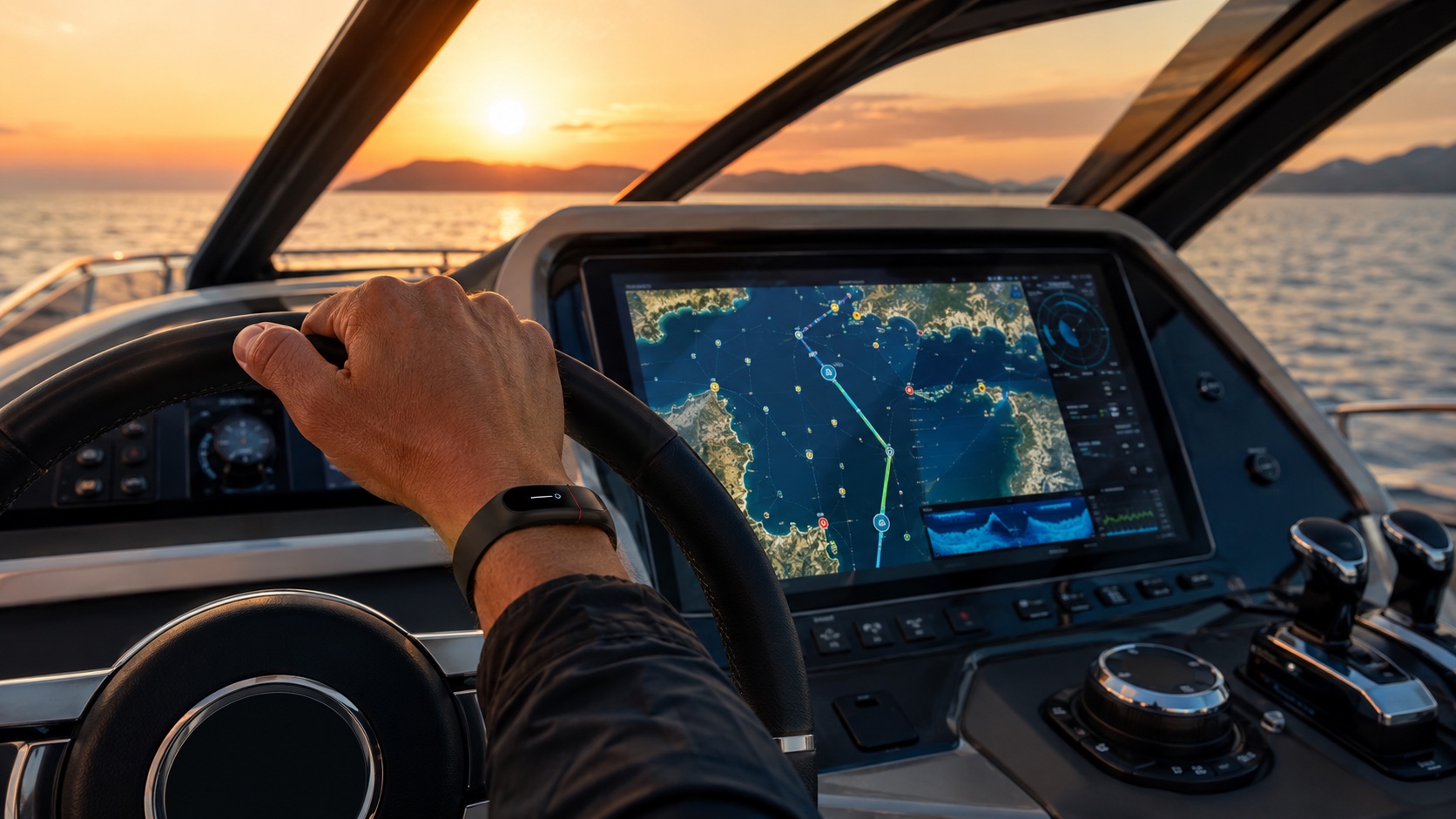
Perhaps the most welcome change is in safety. One of the highlights of the year is the wireless Bluetooth engine cut-off, such as the FELL MOB+: instead of the old safety lanyard tied to your wrist, the skipper wears a smart wristband connected to the boat. If the helmsman falls into the water or moves too far from the helm, the engine shuts down automatically — preventing the dangerous "runaway boat", one of the leading causes of serious accidents.
Artificial intelligence that "reads" the sea
Artificial intelligence is no longer a promise; it has become a tool on board. Navigation systems now use AI to plan routes and forecast weather with far greater accuracy, cross-referencing real-time data.
A good example is FishCast, by Simrad, which combines decades of ocean data with scientific modelling to display sea surface temperature, currents and the most promising "hot spots" directly on the helm screen. In practice, the navigator (and the angler) begins to see the ocean as never before.
Sharper screens and everything connected
The command centre has evolved too. The new generation of multifunction displays, such as the Garmin GPSMap 9000xsv, brings 4K resolution screens and ultra-high-speed networks that integrate sonar, cartography and cameras in a single environment.
Connectivity is another star: VHF radios such as the Em-trak X100 can already be controlled from a smartphone or smartwatch, with integrated AIS — the same technology that helps vessels "see" one another and avoid collisions.
More efficiency, less impact
Sustainability and savings go hand in hand in the 2026 line-up. New-geometry propellers, such as Sharrow (VEEM), promise more economical, smoother and quieter navigation. On-board equipment, such as the Dometic CSX refrigeration units, arrives consuming 15% less energy and using refrigerant gases with lower environmental impact.
These are advances that speak directly to the Ocean Economy: using less fuel and energy is good for your wallet and for the planet.
What this means for those who live the sea
The message of 2026 is clear: boating is becoming safer (technology looks after those on board), smarter (AI helps decide the route) and more efficient (less consumption, less impact). For Brazil, with its vast coastline and an expanding marine sector, keeping up with these trends is essential to navigate — truly — ahead of the curve.
With information from Marlin Magazine and MarineMax.
By: Redação Mundo Mar
Photo: Ilustração IA — Mundo Mar