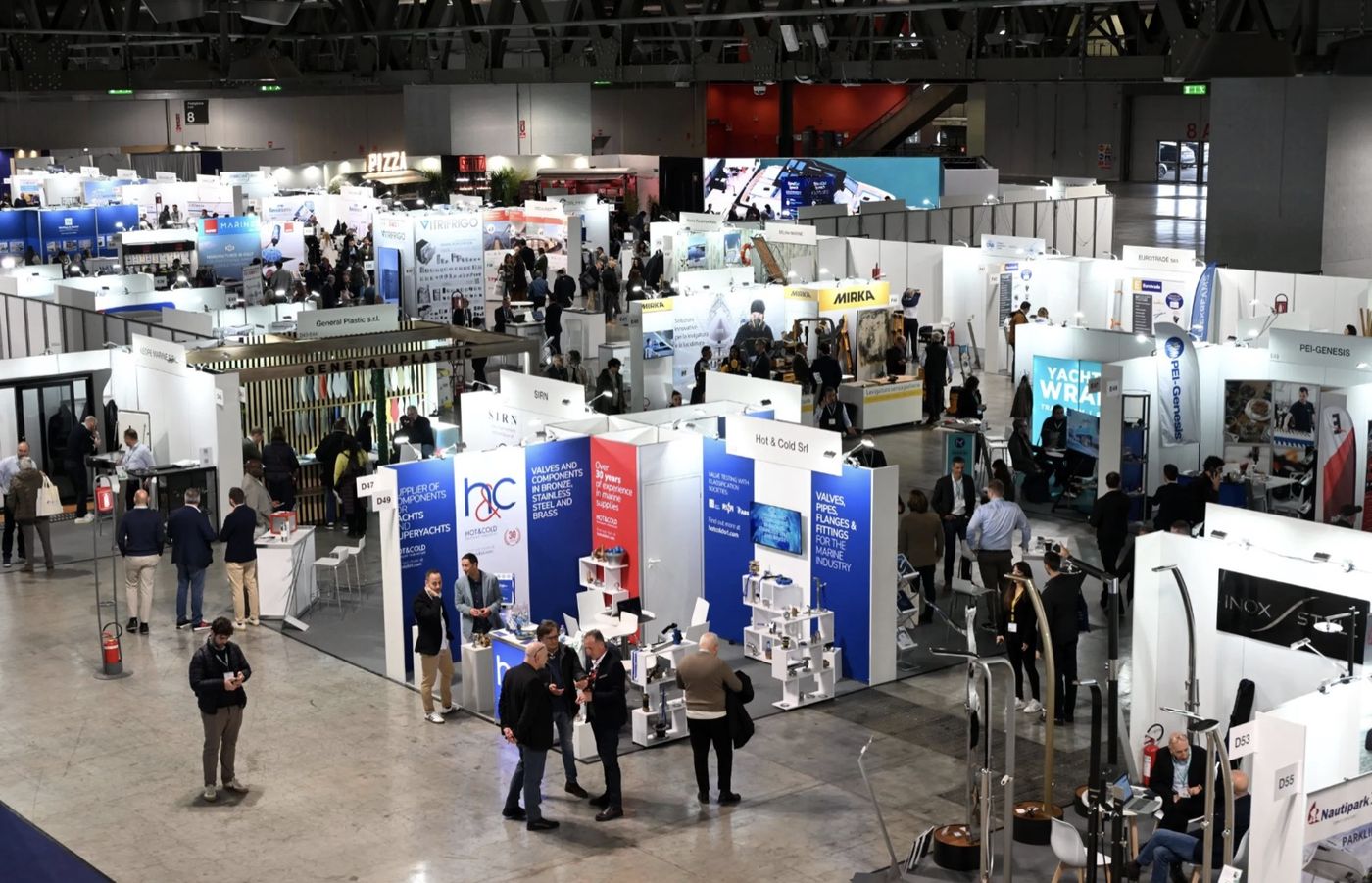
The big nautical fairs usually have the vessels as the main attraction. SEAQUIP was born with a different proposal: to show everything that lies behind the construction, operation and technological evolution of a boat.
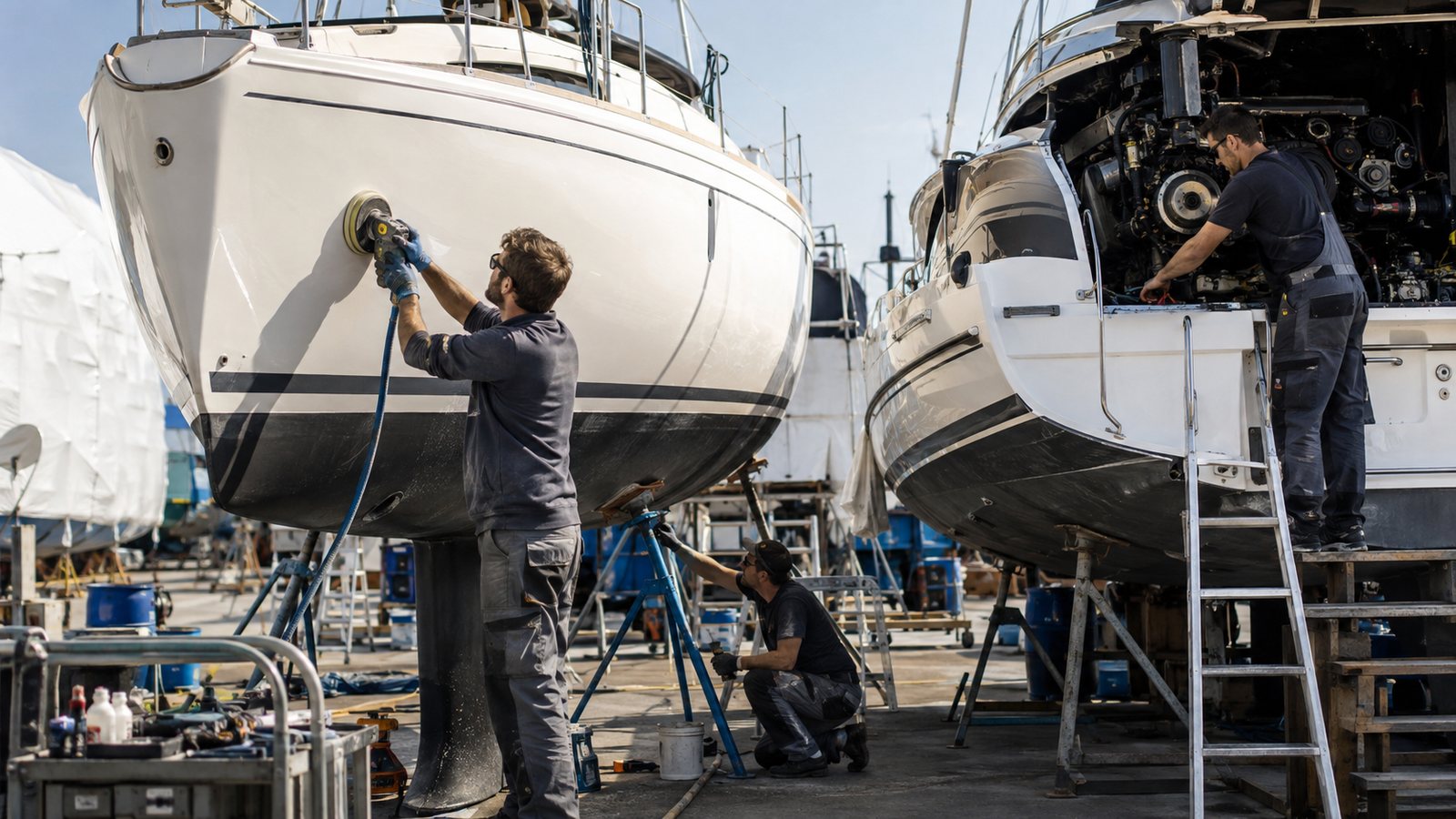
Instead of focusing its attention on the models displayed in the water, the event brings together manufacturers of components, propulsion systems, electronics, software, materials, safety equipment, interior solutions, marinas, shipyards and refit operations.
After debuting in March 2026, at Fiera Milano Rho, SEAQUIP has already confirmed its second edition for 2, 3 and 4 March 2027, again in Milan. The organisers present the gathering as an exclusively B2B platform, aimed at the professionals who design, build, equip, maintain and manage vessels.
A fair created for the production chain
SEAQUIP emerges at a time when the marine industry needs to integrate different areas of knowledge. A new yacht no longer depends only on hull, propulsion and finishing. It incorporates software, automation, energy management, connectivity, on-board intelligence, new materials and systems capable of following the entire life cycle of the vessel.
It is precisely on this point that the event aims to stand out. The proposal is not just to present finished products, but to bring shipyards and suppliers closer together during the research, development and engineering stages.
The first edition brought together more than 160 exhibitors from 13 countries, according to information released before the event opened. After the three days of programming, the organisers reported having registered more than 3,000 entries by sector professionals. More than half of the exhibitors are said to have confirmed their interest in returning to the following edition.
The result helped to consolidate the idea that there was room in Italy for a technical, specialised fair with an environment geared towards business between companies.
Hybrid propulsion and decarbonisation on the agenda
Among the main subjects debated at the debut edition were hybrid systems and the search for alternatives capable of reducing consumption, noise and emissions.
The technical programme presented projects developed by the Azimut Benetti Group in collaboration with specialised suppliers. Among the cases were the operating system known as Hotel Mode and a mild hybrid solution applied to the Azimut 44M, in addition to an integrated hybrid system for the Benetti B.Neos 40M.
Alternative fuels and the different technological routes for the decarbonisation of yachts were also discussed. Representatives of RINA, Volvo Penta, VULKAN, mtu, MAN and the Superyacht Builders Association took part in the debate.
The discussion showed that there is no single ready-made solution for the whole fleet. Hybridisation, partial electrification, intelligent energy management and alternative fuels should advance in a combined way, according to the size of the vessel, the usage profile and the available infrastructure.
3D printing begins to gain ground in shipyards
Additive manufacturing was another highlight. 3D printing is moving beyond being used only to create prototypes to gain applications in the manufacture of parts, moulds, customised components and structures with more complex geometries.
According to SEAQUIP's technical programme, the technology can reduce production stages, eliminate the need for some traditional moulds and broaden the freedom of designers. It also opens the way for lighter, multifunctional components produced on demand.
For the marine industry, this evolution can be especially important. Boatbuilding involves smaller series and a high level of customisation, features that make additive manufacturing potentially strategic for shipyards, refit companies and suppliers.
In addition to producing new parts, 3D printing can help in the replacement of discontinued components, reducing stocks and shortening waiting times during maintenance.
Carbon fibre returns to the production cycle
One of the most relevant solutions presented on the sustainability agenda was the FIB3R project, by Herambiente, a company of the Hera Group.
The facility was presented as the first European unit capable of regenerating carbon fibre on an industrial scale, recovering lightness and strength properties close to those of the virgin material. The process can allow the reuse of industrial waste and, in the future, of materials from vessels and components at the end of their useful life.
Recycling composites is one of the industry's biggest challenges. Materials such as fibreglass and carbon fibre deliver low weight and high strength, but have complex processes for separation and reuse.
By transforming part of this waste back into raw material, technologies such as FIB3R can help create more circular production chains and reduce dependence on entirely new materials.
Foils leave the competitions and advance to other vessels
The so-called "foiling frontier" also gained space at SEAQUIP.
Representatives of RINA, the Ferretti Group, Sanlorenzo and the Foiling Organization discussed the development of hydrofoils, the engineering requirements and the aspects related to the certification of these vessels.
The technology uses submerged surfaces to lift part or almost all of the hull above the water during navigation. By reducing contact with the sea, foils can decrease hydrodynamic drag and improve efficiency.
After gaining visibility in high-performance regattas, these systems are reaching transport vessels, electric boats and leisure projects. The evolution, however, requires new answers in stability, control, safety, maintenance and certification.
Digitalisation to follow the whole life of the boat
SEAQUIP does not intend to treat digitalisation merely as connectivity or entertainment on board.
At the first meeting of its Advisory Board, held in June 2026, shipyard representatives discussed the use of data throughout the entire life cycle of a yacht. Among the applications are predictive maintenance, warranty management, fault recording, integration between suppliers and the creation of digital histories for future generations of vessels.
This information can allow the shipyard to understand how each system works in real conditions. Sensors, software and connected platforms come to record consumption, operating hours, temperature, performance and maintenance needs.
The boat ceases to be just a product delivered to the client and starts to work as a platform capable of generating information for operators, manufacturers and technical teams.
The discussion also highlighted the need to integrate suppliers into the engineering and production systems of the shipyards. Companies capable of working in a connected way with design, CAD and industrial management platforms will be able to gain an advantage in the production chain.
Responsible interiors and more efficient materials
Innovation also reached interiors. The 2026 programme discussed how materials, coverings, thermal insulation, durability and production processes can reduce impacts without compromising the comfort and quality required in the yacht market.
The fair brought together professionals linked to design, architecture and the development of surfaces and finishes. The aim was to show that sustainability does not depend only on propulsion. It is also related to the origin of the materials, to waste during production, to maintenance and to the possibility of replacing or reusing components.
Another point debated was the evolution of surface treatments and nautical coatings. New formulations seek to increase resistance to corrosion and the marine environment while reducing the use of substances with a greater environmental impact.
The event wants to connect boating with other industries
One of the most innovative aspects of SEAQUIP lies in its attempt to bring technologies from other segments into boatbuilding.
Automotive, aerospace, architecture, design, artificial intelligence, digital manufacturing and new materials can provide solutions that have not yet been fully adopted by shipyards.
The event's Advisory Board brings together representatives of companies such as Azimut Benetti, Antonini Navi, Baglietto, Groupe Beneteau, Cantiere Rossini, Ferretti, Rio Yachts, Sanlorenzo, Solaris Yachts, Valdettaro Group and WOSA Yacht Refit & Survey. The group should help guide the themes and priorities of the coming editions.
Among the subjects defined are digitalisation, innovation, safety, weight reduction, sustainability of investments and the development of so-called smart yachting.
Marinas gain space in the 2027 edition
The second edition will broaden the presence of products and services aimed at marinas.
The organisers have already confirmed new spaces and solutions for port managers, including equipment for operation, maintenance, handling and servicing of vessels. The initiative brings the fair even closer to the whole Ocean Economy, connecting industry, services, infrastructure and nautical tourism.
SEAQUIP has also become a member of the International Federation of Boat Show Organisers as an emerging member. The federation brings together organisers of international events such as METSTRADE, boot Düsseldorf, the Fort Lauderdale International Boat Show, the Miami International Boat Show and IBEX.
In May 2026, the event also became a technical partner of the Venice Boat Show, strengthening its presence in the Italian nautical calendar.
More than a components fair
SEAQUIP is still building its history, but its proposal points to an important shift in the international calendar.
In a sector in which technologies are increasingly integrated, manufacturers cannot innovate in isolation. Shipyards need suppliers, suppliers need to understand the demands of designers and everyone needs to keep up with environmental, digital and regulatory changes.
The Milan fair seeks to occupy exactly this space: to be an environment in which an idea can find the engineering, the investment and the industrial partnership needed to reach the water.
The next SEAQUIP will be held from 2 to 4 March 2027, at Fiera Milano Rho. The challenge now will be to turn the good performance of the debut into a permanent international platform for technology, business and nautical innovation.
By: Redação Mundo Mar
Photo: Divulgação SEAQUIP