Brazil's marine sector is facing a good problem. The fleet is growing, shipyards are expanding, marinas are multiplying, and the demand for services keeps pace with that rhythm. The bottleneck today is not a lack of boats or a lack of customers. It is the lack of qualified people to serve all of it.
It is a warning that ACATMAR, the Brazilian Nautical Association, chaired by Mané Ferrari, has been repeating. The sector grows consistently, and the training of professionals has not kept up with that advance. Santa Catarina, which concentrates around 70% of national boat production, is where this challenge appears most strongly: it is home to the shipyards, the suppliers and most of the country's service chain.
Where the people are missing
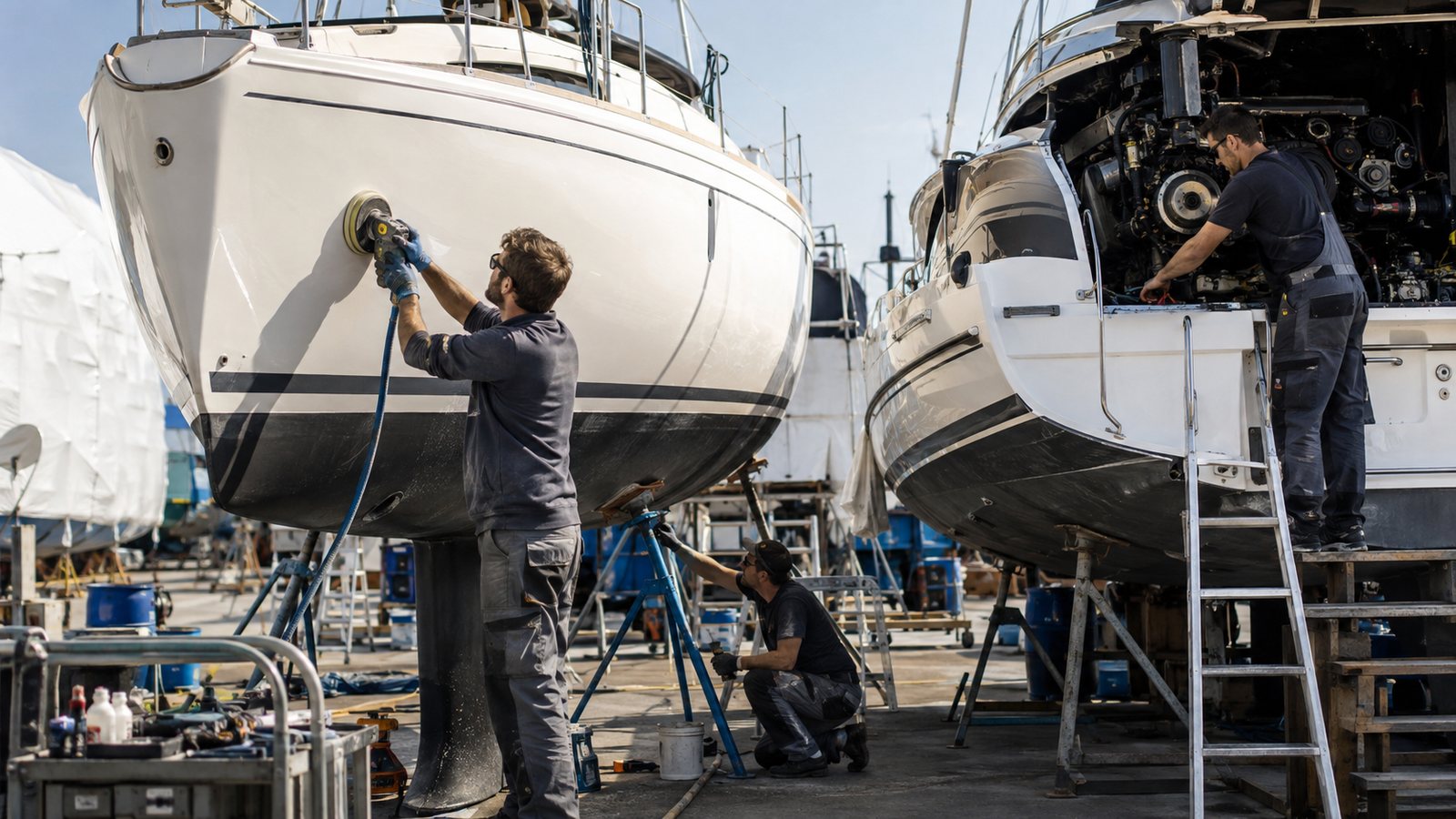
The shortage runs across the whole production chain. In boatbuilding, there is a lack of professionals in joinery, assembly, mechanics, electrical work, finishing and painting. In the next stage, maintenance and operation, there is a lack of those who look after the boat day to day: engine mechanics, electrical and electronic work, lamination, upholstery and marina operation.
And the demand does not stop at the workshop. As the modern boat incorporates more electronics, automation and connectivity, the sector also comes to need naval engineering and architecture, onboard technology, and professionals in nautical tourism, hospitality and gastronomy, who sustain the experience on board and ashore.
Why the shortage happened
The problem has familiar roots. For a long time, the marine sector was treated as a niche market, almost invisible to those choosing a career or setting up a technical course. Meanwhile, much of the experienced workforce grew older, and the renewal did not come at the same speed.
The result is a mismatch: the industry accelerates, and the expansion of industrial plants such as Fibrafort's, in Santa Catarina, shows the scale of the movement, but the school that trains the welder, the laminator and the mechanic did not keep up. That is the gap the sector now needs to close.
The way out is training
The solution is no mystery, it is training. Bringing the sector closer to technical schools, qualification courses and education bodies is what turns today's demand into tomorrow's jobs. It is one of ACATMAR's causes, working to connect the industry, its member marinas and professional training, and Santa Catarina is where this partnership can set the example for the rest of the country.
For those starting out or considering a career change, the message is encouraging. The ocean economy is one of the few sectors that today has more openings than professionals ready to fill them. Anyone who trains now is entering a market that keeps growing.
By: Redação Mundo Mar
Photo: Imagem gerada por IA · Mundo Mar