Two days to discuss the sea as a driver of development
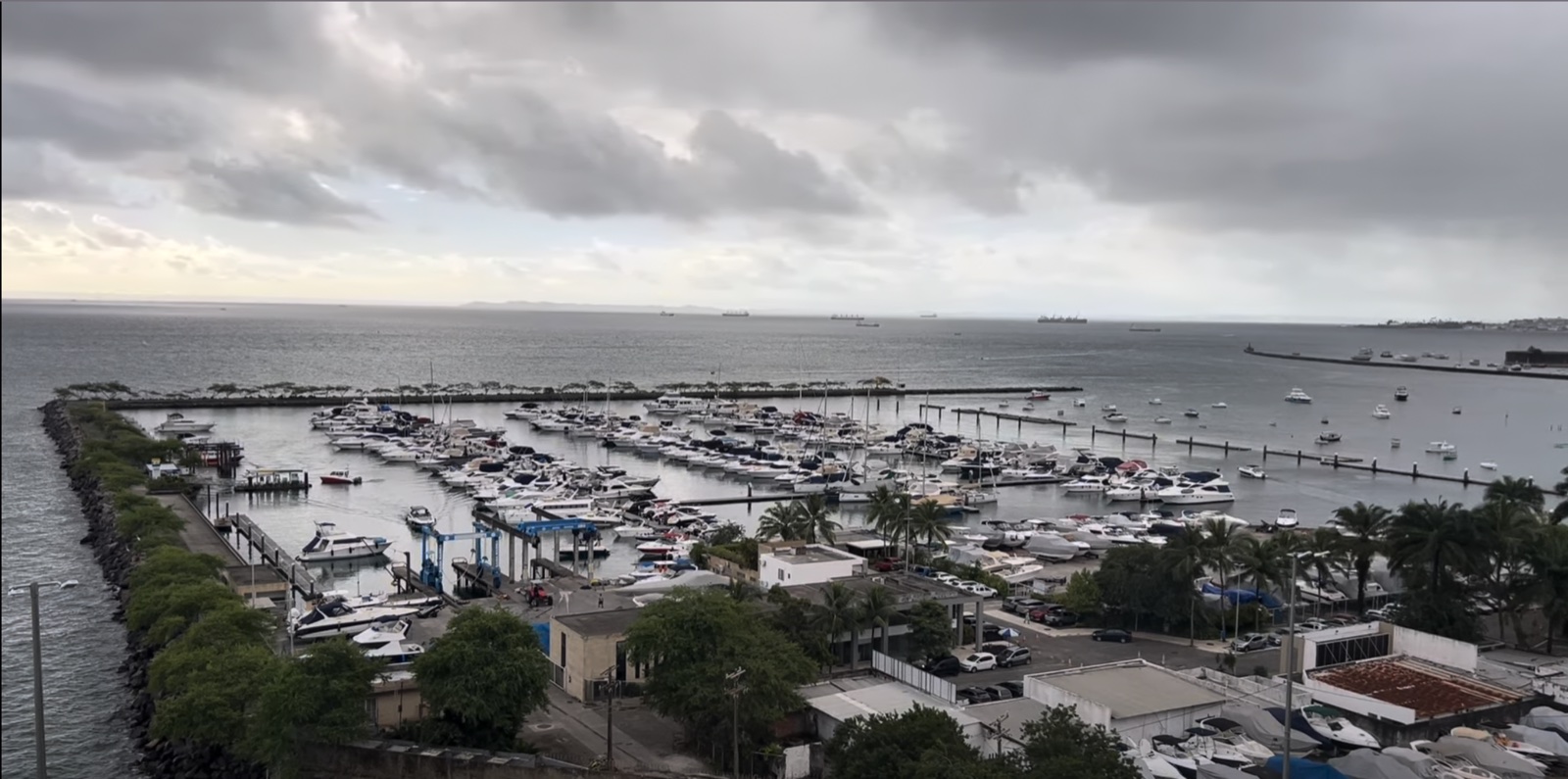
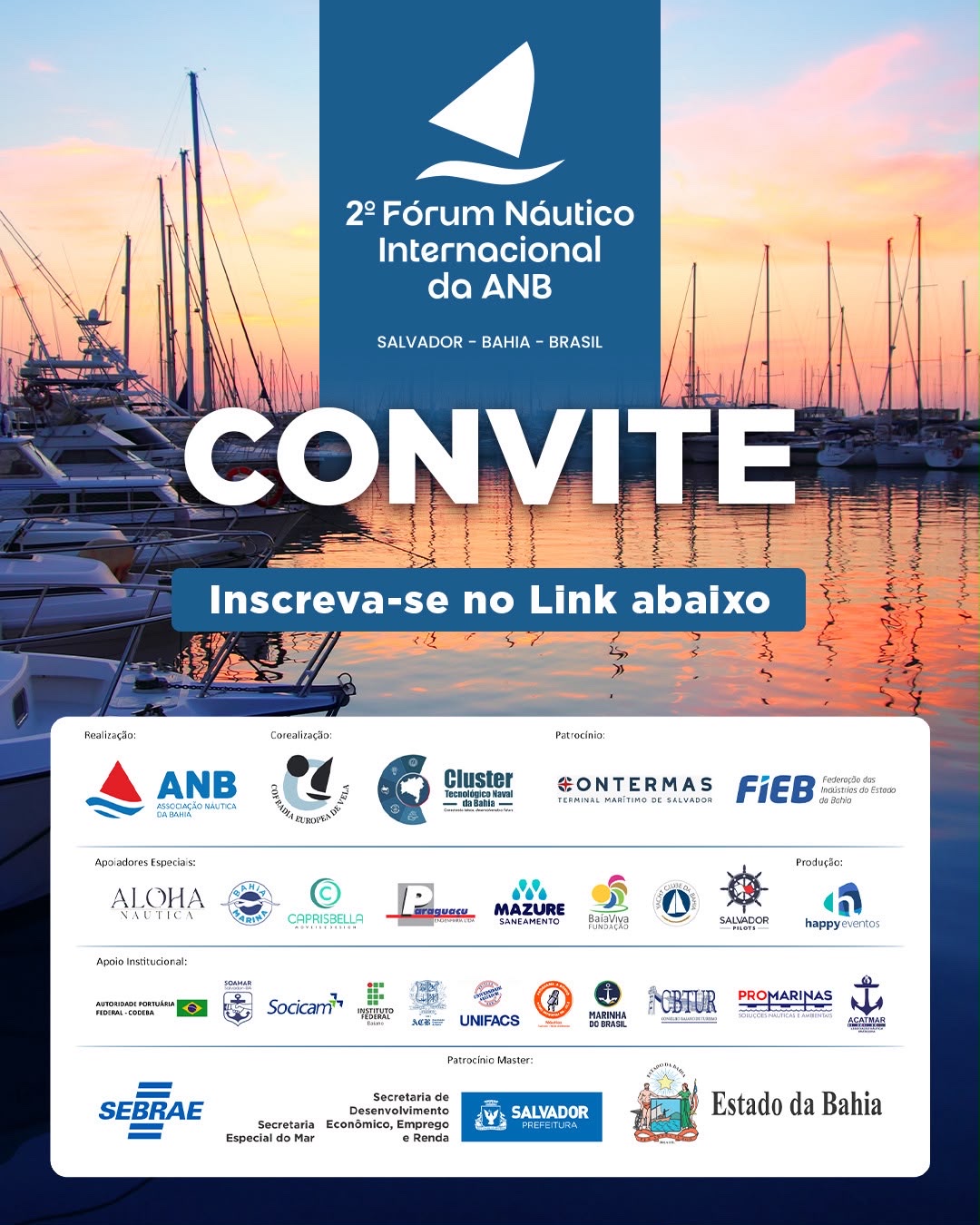
Salvador is back on the map of the major debates on the development of sea-related activities. On 16 and 17 September 2026, the Salvador Maritime Terminal, in the Comércio district, hosts the 2nd International Nautical Forum of the Bahia Nautical Association (ANB).
More than discussing boats, the event proposes to look at the breadth of the Ocean Economy and the Blue Economy, connecting infrastructure, tourism, industry, ports, fishing, sustainability, sports, urban planning, employment and geopolitics.
The programme released by the organisers foresees 10 panels, 38 speakers and 10 moderators, bringing together professionals and experts from Brazil and abroad. It is organised by ANB, co-organised by the European Sailing Confraternity (CEV), from Spain, and the Bahia Naval Technology Cluster. The official registration page confirms the dates, venue and programme.
The Forum reaches its second edition with a clear aim: to broaden the articulation between the productive sector, government, investors, researchers and professionals working across the different economic chains linked to the water.
Port and city open a discussion that goes beyond the quay
One of the programme's strengths lies precisely in the diversity of the chosen topics.
The first panel, on the morning of 16 September, will address Port-City Integration, a strategic subject for coastal cities that must reconcile port activity, urban development, tourism, logistics and quality of life.
Expected in the debate are Alberto Fuentes Losada, secretary-general of the Port of Vigo, in Spain; Antonio Gobbo, CEO of CODEBA; and Maria Eduarda Gordilho Lomanto, Salvador's Secretary of the Sea. The moderator will be journalist and Mundo Mar TV Show presenter Michele Castilho Henrique.
The presence of a Spanish experience in the debate broadens an important discussion for Brazil: ports do not have to be structures isolated from urban daily life. In different maritime cities around the world, their relationship with the territory has become part of strategies for economic development, urban regeneration, mobility and tourism.
Sport, tourism and nautical infrastructure also on the agenda
Still on the first day, the Forum moves through different segments.
The second panel will discuss Nautical Sports: Education, Health, Citizenship and Inclusion, taking sport beyond competition and analysing its potential as an educational and social tool.
Next, the panel Nautical and Religious Tourism as Drivers of Regional Development places two of Bahia's major vocations in the same discussion: cultural and religious heritage and the state's historic relationship with the sea.
For a state with an extensive coastline, islands, bays, rivers, established tourist destinations and a strong maritime identity, discussing nautical tourism as an economic activity means addressing far more than the movement of boats. It means talking about lodging, gastronomy, services, maintenance, retail, professional training, transport and tourist experiences.
Infrastructure closes the first day's debates with the panel Investments in Nautical Infrastructure, Marinas and Related Facilities.
The topic touches one of the decisive points for the growth of Brazil's nautical sector: it is not enough to build and sell boats. The activity's development also depends on suitable places for storage, operation, maintenance, refuelling, water access and services, as well as environmental planning and legal certainty.
From fishing to coastal management: the Blue Economy at different scales
The second day, 17 September, begins with the panel Fishing and Aquaculture: from Production to Gastronomy.
The idea is to bring production, sustainability, logistics and gastronomy closer together, showing how a traditional activity can join higher-value chains when connected to innovation and the development of territories.
Soon after, the panel Coastal Management: Sustainable Lakes, Rivers and Oceans broadens the view to environmental conservation, water management and economic development.
Among the expected names are João Nicolodi, professor at the Institute of Oceanography of the Federal University of Rio Grande and coordinator of Coastal and Marine Management at the Ministry of the Environment and Climate Change; Camilo Mateo Botero, a coastal-management researcher; and Maurício Carvalho, biologist, diver and shipwreck researcher.
It is a particularly relevant discussion because there is no consistent Blue Economy without environmental management. The challenge for governments and the private sector is to turn natural resources and geographic location into economic development without compromising the very natural heritage that sustains these activities.
Women take a strategic place in boating
The programme also makes room for the panel "Boating by Women: Events, Shipyards, Marinas and Strategic Planning".
The session will bring together businesswomen and executives who work directly in the management of businesses and projects related to the sector, sharing experience in marinas, boat sales, events, sport and market development.
The subject follows a transformation already visible in the industry: more and more women are taking on technical, executive, commercial and institutional roles in a chain historically associated mostly with men. And the debate is no longer only about a female presence but moves to another stage: leadership, decision-making and participation in the sector's growth strategy.
Nautical and naval industry puts jobs and income at the centre
One of the panels most directly linked to economic development will take place on the afternoon of the 17th: Nautical and Naval Industry, Job and Income Creation.
Taking part are names linked to industry, technology, the public sector and the Ocean Economy, among them Miguel Andrade Filho, of SENAI CIMATEC; Mario Moura, of the Enseada Shipyard; Mila Paes, Salvador's Secretary of Economic Development, Employment and Income; and Leandro "Mané" Ferrari, president of ACATMAR and of Blue Nautical Hub Brasil.
The presence of this theme at the Forum helps shed light on a characteristic often overlooked by those who see boating only through the final product.
A boat is the result of an extensive production chain: shipyards, engines, electronics, electrical systems, composites, joinery, upholstery, glass, stainless steel, painting, design, engineering, logistics, maintenance, marinas, retail, tourism and a range of specialised services. It is precisely this reach that makes the nautical industry a potential generator of jobs and business far beyond the shipyard.
Blue Amazon and geopolitics on the radar
The Forum also brings to the stage a discussion that has gained even more weight in recent years: Oceans, Economy and World Geopolitics.
The agenda involves the strategic importance of the Blue Amazon, sovereignty over Brazil's jurisdictional waters, maritime security and the role of the oceans in the country's international standing. It is a theme that brings the Ocean Economy close to defence, energy, foreign trade, maritime routes, science, natural resources and international relations.
In a world where much of global trade depends on maritime transport, understanding the ocean only as scenery is no longer enough. It is infrastructure, territory, a source of resources, a logistics corridor and an element of sovereignty.
Cases show when the Ocean Economy leaves the concept and becomes a project
The closing panel will be "Inspiring Cases: what worked!".
The idea is to present experiences capable of demonstrating, in practice, how water-related projects can transform cities and territories. Waterway mobility, port regeneration, sustainability, nautical infrastructure, innovation and integration between the private sector and government are among the strands presented by the organisers.
This may be one of the most important points of events like the ANB International Nautical Forum: to put side by side those who plan, those who regulate, those who research, those who invest and those who actually deliver. Because the Ocean Economy stops being just a concept when it begins to generate infrastructure, businesses, tourism, technology, jobs and opportunities in coastal territories.
Bahia wants to expand its position in the Ocean Economy
According to ANB itself, the initiative's goals include broadening international exchange, connecting governments, experts and investors and strengthening Bahia as a hub for the development of the nautical sector.
Holding an international Forum in Salvador also draws attention to an advantage the state has before it: its geographic, economic and cultural relationship with the sea. Turning that vocation into development, however, depends on planning, infrastructure, a business environment, workforce training, sustainability and institutional coordination.
This is exactly where events like the Forum gain importance: less through the isolated discussion of one segment and more through the chance to make the different chains of the Ocean Economy talk to one another.
Beyond the cycle of debates, the event will simultaneously hold the 1st Nautical Business and Tourism Expo, conceived as a space to bring together companies, the market, tourism, investors and public institutions.
Details
2nd ANB International Nautical Forum
16 and 17 September 2026
CONTERMAS, Salvador Maritime Terminal, Avenida da França, Comércio, Salvador (BA), Brazil
Free registration through the link: doity.com.br/2o-forum-nautico-internacional-da-anb
The organisers note that the programme and the make-up of the panels may change.
By: Redação Mundo Mar
Photo: Foto: Mundo Mar