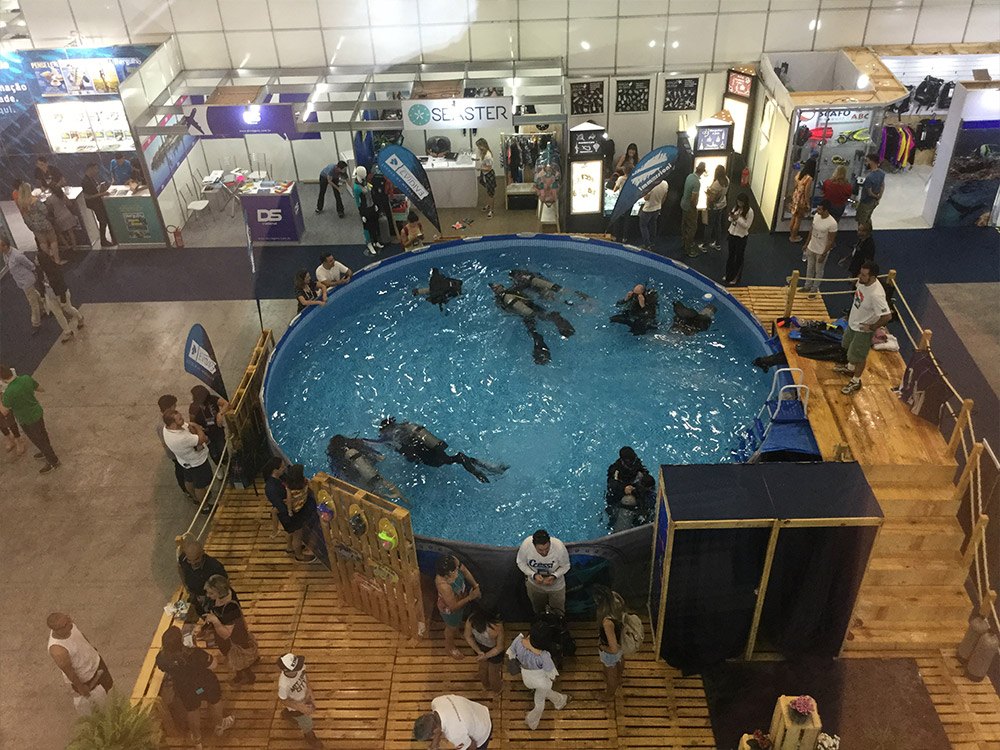
The PADI Dive Festival reaches its 20th edition on 28 and 29 August, at SENAC Santo Amaro in São Paulo, and brings with it something the Brazilian diving sector has never had in organised form: a consolidated survey of who the country's divers are, what they earn and what they spend.
The event is run by B.D.O. PADI São Paulo, the official distributor of the certification body's materials in Brazil, with support from PADI Americas. Friday the 28th is reserved for member professionals. Saturday the 29th opens to the public, with free entry subject to prior registration. The organisers expect at least 500 people on the open day.
A market small in volume and high in value
The figures presented by the organisers help size up a segment that tends to go unnoticed in blue economy accounting.
The entry-level course, the gateway to the activity, carries an average ticket of R$ 2,000 to R$ 3,500. Those who stay in the sport invest an average of R$ 10,000 in a complete set of their own equipment. And the qualified practitioner spends around 4,000 dollars a year on international adventure travel.
It is a consumption profile closer to high-end nautical tourism than to mass sport, and it explains why operators, destinations and manufacturers treat the trade show calendar as a business tool rather than a shop window.
In Brazil, PADI counts 86 dive centres, within a network of more than 155 across South America, and more than 180,000 certified divers in the country to date. Annual training runs at around 17,000 new Brazilian practitioners, within a global total of more than one million certifications a year.
Who the Brazilian diver is
This is the first time the organisation has released a consolidated socioeconomic profile of the practitioner in the country. The data describe an audience with high income and younger than the common perception of the sport suggests.
| Segment | Distribution |
|---|---|
| Social class | 30% class A, 56% class B |
| Education | 58% with higher education, 27% graduated and 31% still studying |
| Age | 42% between 18 and 29, 53% between 30 and 49, 5% over 50 |
| Gender | 61% men, 39% women |
| Marital status | 48% single, 42% married or in a stable partnership |
The concentration in classes A and B, adding up to 86% of practitioners, confirms the financial barrier to entry. The 42% share aged between 18 and 29, however, contradicts the reading that diving has aged along with its historical base.
The problem is not teaching, it is creating the desire
The certification body's reading of its own market is direct, and moves the diagnosis from the technical field to the behavioural one.
"The industry's great challenge today is not teaching people to dive, it is making them want to dive. The first experience has to generate wonder, emotional connection and a sense of belonging," says Stavros Silva, business development executive at PADI.
The sentence sums up the strategy behind this edition. In a market the organisation itself describes as stabilised, and faced with the consumer caution typical of an election year in Brazil, the festival has been built with a counter-cyclical purpose: rather than waiting for demand to return, to provoke people into trying.
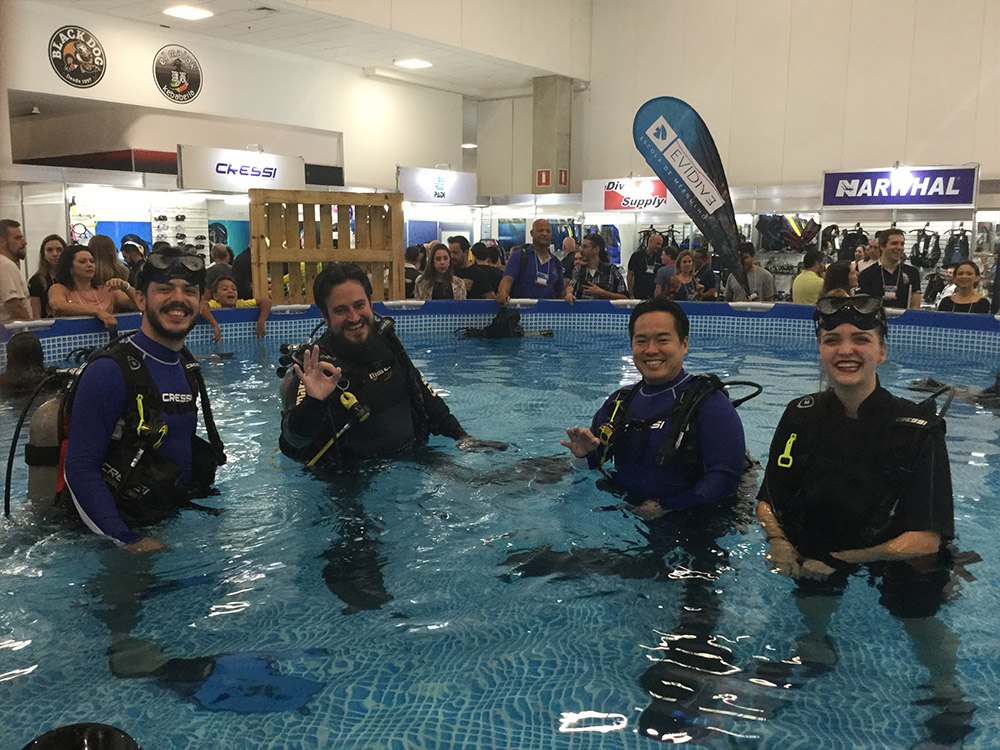
In practice, that shows up in two free activities set up on the show floor. Discover Scuba Diving lets anyone aged 8 or over experience breathing underwater in a pool, with an instructor alongside and equipment supplied by the organisers. And mermaiding, the discipline built around monofin swimming, comes in as a gateway for an audience drawn first by the visual appeal and only later by technical diving. Both require prior booking through the website.
Trade floor, technical content and conservation
Alongside stands from operators, travel agencies, destinations and equipment brands, both Brazilian and international, the programme gathers talks, clinics, workshops and members-only forums, with specialists in diving, tourism, biology and marine conservation.
The environmental agenda appears on two fronts. PADI brings the work of the PADI AWARE Foundation, its conservation arm, and the show hosts Sea Shepherd, the organisation known for direct action in defence of marine life.
"Celebrating 20 editions gives us the certainty that we have built a solid base, but the PADI Dive Festival 2026 is, above all, a look at the future. This event was designed to be the market's turning point, bringing together veterans and new enthusiasts in an environment of innovation, business and passion for the ocean," says Stavros Silva.
Founded more than 60 years ago, PADI operates in 186 countries and territories, with more than 6,600 accredited dive centres and resorts and over 128,000 member professionals. The organisation has certified more than 30 million divers since it was created.
Details
| PADI Dive Festival, 20th edition | |
|---|---|
| Dates | 28 August, for PADI professionals, and 29 August, open to the public |
| Venue | SENAC Santo Amaro, Av. Engenheiro Eusébio Stevaux, 823, São Paulo |
| Access | on-site parking, close to Jurubatuba metro station |
| Entry | free, with registration at padifestival.com.br |
| Experiences | Discover Scuba Diving and mermaiding, free and by prior booking |
| Organised by | B.D.O. PADI São Paulo, with support from PADI Americas |
By: Redação Mundo Mar
Photo: Fotos: divulgação